

DNREC Revises 2026-2027 Black Sea Bass Recreational Fishing Regulations for Compliance With Fishery Management Plan
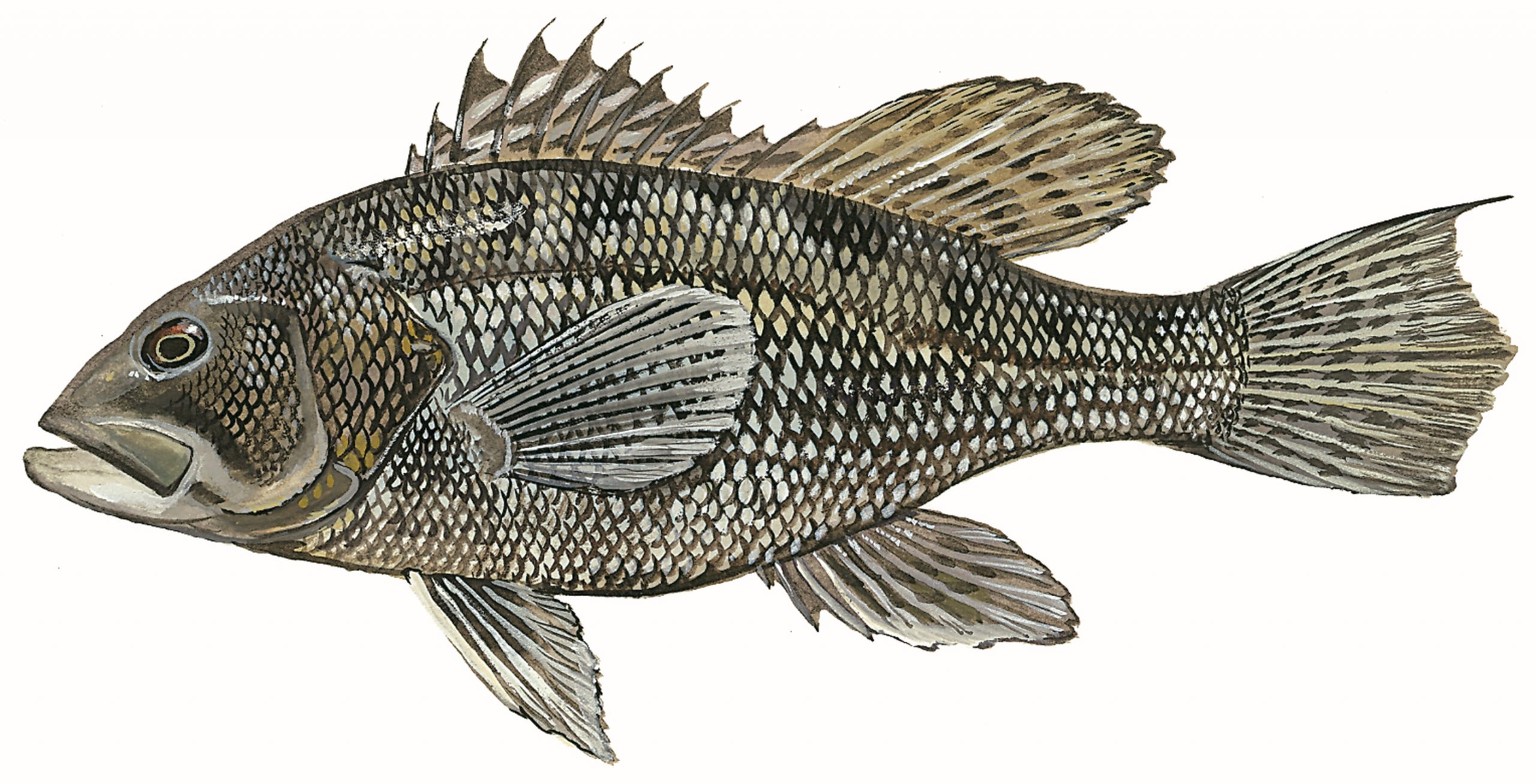
A black sea bass. Revised recreational fishing state regulations allow for a season opening May 1 /Delaware DNREC graphic: Duane Raver Jr.
The Delaware Department of Natural Resources and Environmental Control is revising recreational fishing state regulations for black sea bass to reflect a greater abundance of the species for anglers to catch. However, DNREC cautions that federal regulations may or may not change to match the state regulations by the time the season opens.
The revised state regulations, which allow for a black sea bass season opening of May 1, were announced today via DNREC order signed by Secretary Greg Patterson. The regulations also will keep Delaware in compliance with the black sea bass fishery management plan of the Mid-Atlantic Fishery Management Council (MAFMC) and the Atlantic States Marine Fisheries Commission (ASMFC).
The 2026 and 2027 changes will reduce the minimum size for black sea bass from 13 to 12.5 inches, open the black sea bass season sooner (May 1, compared to two weeks later in previous years) and eliminate an in-season closure from Oct. 1 through Oct. 9. The recreational daily black sea bass possession limit remains at 15.
The revisions followed an MAFMC-ASMFC meeting last August to review the 2025 management track assessment. The review determined that black sea bass were not overfished as a species and that spawning stock biomass for black sea bass was estimated to be almost three times higher than the target of the fishery management plan.
MAFMC and ASMFC went on to approve a recreational harvest limit (RHL) of 8.14 million pounds for both 2026 and 2027, denoting a 30% increase over the 2025 RHL. The RHL increase led MAFMC and ASMFC to revise recreational regulations for the entire management unit, raising the black sea bass recreational harvest by 20% for 2026 and 2027. The Southern Region of the management unit, which includes Delaware, was limited by ASMFC to a 16.5% harvest increase.
The DNREC order on regulatory changes applies to Delaware waters, which extend to three miles offshore. Noteworthy is that most of Delaware’s recreational black sea bass catch occurs in federal waters, which extend from three to 200 miles offshore, and federal regulations have traditionally been updated to match the state regulations. However, NOAA Fisheries, the federal agency responsible for ensuring that black sea bass regulations in federal waters align with regs in state waters, is behind schedule in implementing its regulatory changes, casting doubt on whether federal and state regulations will be aligned by May 1.
MAFMC and ASMFC have both sent letters urging NOAA Fisheries to immediately finalize federal regulations for black sea bass. Until that time, default regulations in effect for black sea bass in waters three miles from shore or more call for a minimum size of 15 inches, an open season May 15 through Sept. 8, and a daily possession limit of five fish. The DNREC Fisheries Section alerts anglers that the situation with NOAA is still evolving and could be settled by the time Delaware’s recreational black sea bass season opens May 1.
About DNREC
The Delaware Department of Natural Resources and Environmental Control protects and manages the state’s natural resources, protects public health, provides outdoor recreational opportunities, and educates Delawareans about the environment. The DNREC Division of Fish and Wildlife conserves and manages Delaware’s fish and wildlife and their habitats, and provides fishing, hunting, wildlife viewing and boating access on more than 75,000 acres of public land owned or managed by the Division of Fish and Wildlife. For more information, visit the website and connect with @DelawareDNREC on YouTube, Facebook, Instagram, X, YouTube or LinkedIn.
Media Contacts: Michael Globetti, michael.globetti@delaware.gov; Nikki Lavoie, nikki.lavoie@delaware.gov
###
Legal Disclaimer:
EIN Presswire provides this news content "as is" without warranty of any kind. We do not accept any responsibility or liability for the accuracy, content, images, videos, licenses, completeness, legality, or reliability of the information contained in this article. If you have any complaints or copyright issues related to this article, kindly contact the author above.
