

DNREC Asks Public to Report Sightings of Wild Turkeys During Annual Survey
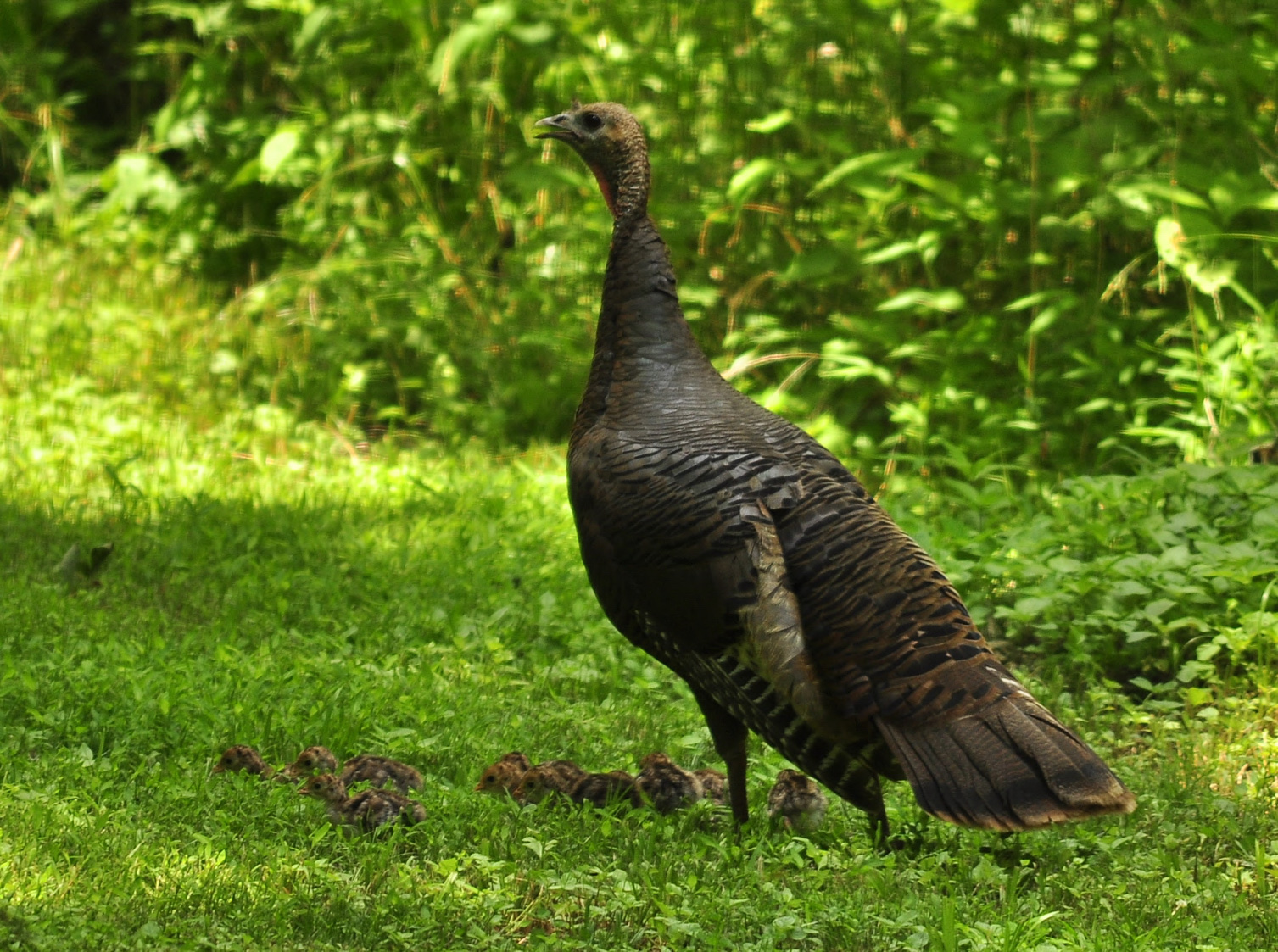
A wild turkey hen with her poults. DNREC asks Delawareans’ help in recording and reporting turkey sightings during the Division of Fish and Wildlife’s annual wild turkey productivity survey July 1 through Aug. 31. /US Fish & Wildlife Service photo
40+ Years Later, Wildlife Biologists Continue to Track and Learn More
About the Biggest Gamebird’s Successful Reintroduction in Delaware
The Department of Natural Resources and Environmental Control is again counting on Delawareans to help with the state’s annual productivity survey for wild turkeys. Volunteers assist the DNREC Division of Fish and Wildlife by collecting information on the continuing distribution and reproductive success of the state’s turkey population, which enables wildlife biologists to efficiently monitor and continue tracking the wild turkey’s ultra-successful reintroduction to the state in the late 20th century.
The simple method, used by many states across the Northeast, asks survey volunteers, while going about their daily activities, to record and report sightings of turkeys during the survey period, which runs from July 1 through Aug. 31. Upon sighting turkeys, survey volunteers are to record the date, location and number of adult hens (females), gobblers (males) and poults (young of the year) that they have observed.
This year, for the first time, the DNREC Division of Fish and Wildlife will be using an online survey form that volunteers will find easier for recording wild turkey sightings. The survey form – found on the de.gov/turkeysurvey webpage – should be submitted by volunteers immediately after new turkey sightings.
The reintroduction of the wild turkey is one of Delaware’s greatest conservation success stories. In the late 1800’s habitat loss and overharvest extirpated wild turkeys from the First State. In 1984 the Division of Fish and Wildlife, using funding from hunting license sales and with the support of the National Wild Turkey Federation, Delaware Wild Lands and other conservation partners, released 34 wild-trapped turkeys into Kent and Sussex Counties. Reintroductions continued through the early 2000s and as the population established itself, a limited hunting season opened in spring 1991.
The annual productivity survey is a critical tool for biologists and wildlife managers to monitor reproductive health, detect population trends and guide conservation and hunting management decisions. Information collected in the survey will accompany annual harvest data and biologists’ efforts to band and track adult birds to get an improved understanding of the status of wild turkeys in Delaware.
About DNREC
The Delaware Department of Natural Resources and Environmental Control protects and manages the state’s natural resources, protects public health, provides outdoor recreational opportunities, and educates Delawareans about the environment. The DNREC Division of Fish and Wildlife conserves and manages Delaware’s fish and wildlife and their habitats, and provides fishing, hunting, wildlife viewing and boating access on more than 75,000 acres of public land owned or managed by the Division of Fish and Wildlife. For more information, visit the website and connect with @DelawareDNREC on YouTube, Facebook, Instagram, X, or LinkedIn.
Media Contacts: Michael Globetti, michael.globetti@delaware.gov; Nikki Lavoie, nikki.lavoie@delaware.gov
Legal Disclaimer:
EIN Presswire provides this news content "as is" without warranty of any kind. We do not accept any responsibility or liability for the accuracy, content, images, videos, licenses, completeness, legality, or reliability of the information contained in this article. If you have any complaints or copyright issues related to this article, kindly contact the author above.
